
NEFEC Municipal Track
Municipal Track
Please scroll down to below the agenda for presentation summaries.
| Friday March 27 | |||
| Time | Topic | Presenter | Location |
| 6:30am - 7:00pm | Registration | Activity Desk | |
| 7:00am - 8:00am | Breakfast | Peninsula | |
| 8:00am - 8:15am | Opening Remarks | Varley Room | |
| 8:15am - 8:45am | OAFC Chief Officer Peer Support Program | OAFC Peer Supporter Fire Chief Jack Burt, Northern Bruce Peninsula | Varley Room |
| 8:45am - 9:15am |
Fire Prevention: Protecting Communities Through Proactive Leadership |
Fire Chief Jack Burt, Northern Bruce Peninsula | Varley Room |
| 9:15am - 10:15am |
Employees vs. Volunteers in the Fire Service: What Municipal Staff Need to Know |
John Saunders, Hicks Morley | Varley Room |
| 10:15am - 10:30am | Coffee Break | Ballroom Conference Hallway | |
| 10:30am - 11:30am |
Automatic Aid vs. Mutual Aid in the Fire Service |
Assistant Deputy Fire Marshal Keith Wells, Office of the Fire Marshal | Varley Room |
| 11:30am - 12:00pm |
Industry Snapshot: Fire Apparatus Cost and Lead Times |
Jamie Zimmerman, Commercial Emergency Equipment | Varley Room |
| 12:00pm - 1:00pm | Lunch | Peninsula | |
| 1:00pm - 2:00pm |
WSIB Cancer Claims in the Fire Service |
Fire Chief Rob Grimwood, Greater Sudbury Fire | Varley Room |
| 2:00pm - 2:45pm |
Understanding FUS Grading: How Fire Underwriters Survey Scores Impact Municipal Risk and Insurance Costs |
Robert Aguiar, Fire Underwriter Survey | Varley Room |
| 2:45pm - 3:00pm | Coffee Break | Ballroom Conference Hallway | |
| 3:00pm - 4:00pm |
Insurance & FUS Panel: How Fire Protection Decisions Influence Municipal Risk and Community Insurance Costs |
To be announced | Varley Room |
| 4:00pm - 8:00pm | Trade Show | Legacy Hall | |
| 4:00pm - 8:00pm | Networking Reception on Trade Show Floor | Legacy Hall | |
Presentation Summaries
OAFC Chief Officer Peer Support Program
Leading a fire service comes with immense responsibility strategic, operational, political, and deeply personal. The role of a Chief Fire Officer is uniquely demanding, and often isolating. Recognizing this, the Ontario Association of Fire Chiefs (OAFC) has developed the Chief Officer Peer Support Program, an initiative designed by chiefs, for chiefs.
This presentation outlines the peer-support network built to strengthen the mental, emotional, and organizational well-being of fire service leaders. Attendees will learn how the program connects Chief Officers with trained peers who understand the pressures of command, major incident leadership, council dynamics, organizational change, and the often unspoken toll of high-stakes decision-making.
Whether navigating operational crises, political complexities, or the personal strains of leadership, Chief Officers deserve a safe space to talk with someone who truly understands the weight of the badge. This session highlights how the OAFC Peer Support Program empowers leaders to support each other and strengthen the fire service as a whole.
Presenter: OAFC Peer Supporter Fire Chief Jack Burt, Northern Bruce Peninsula
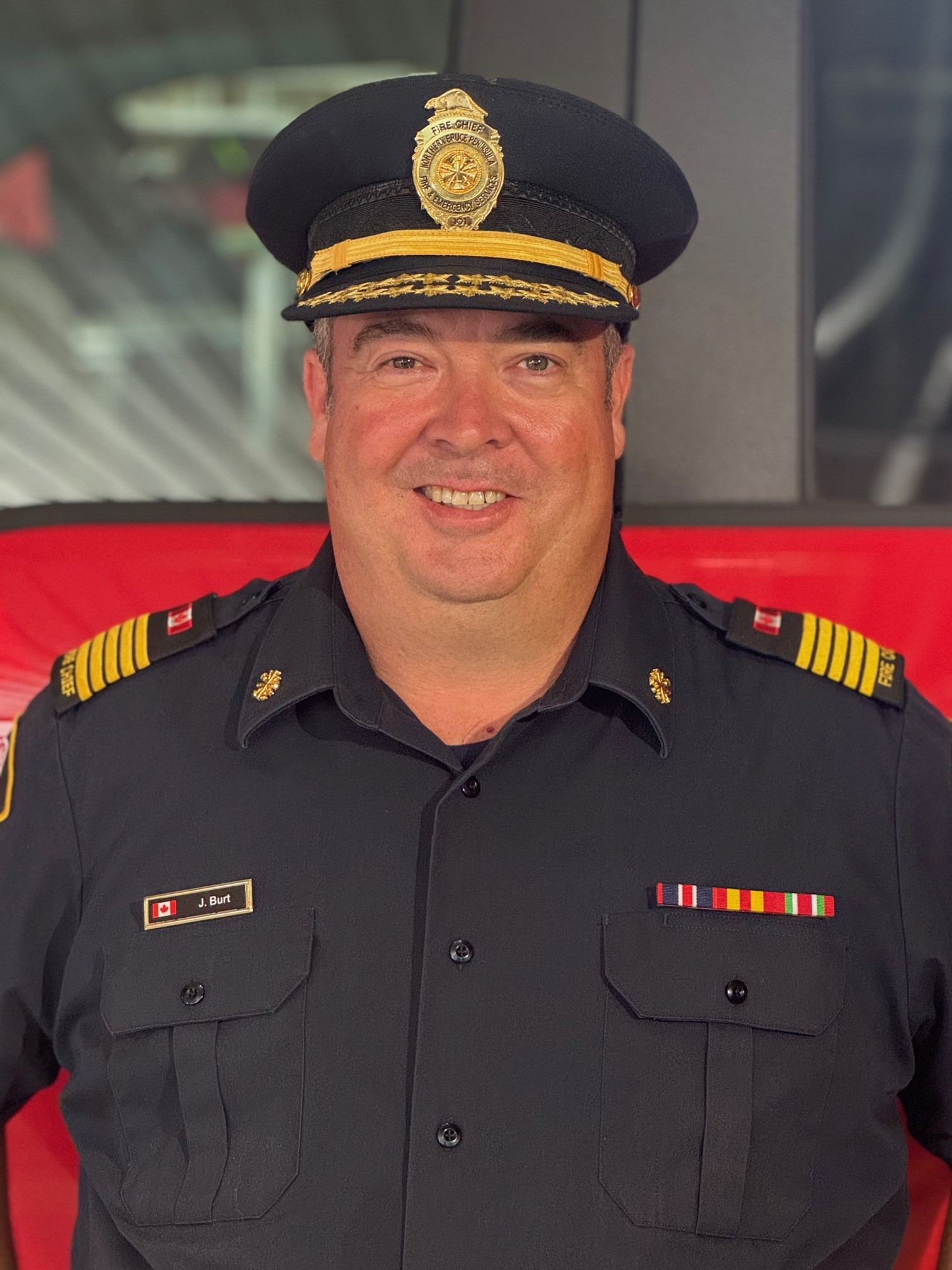 Fire Chief Jack Burt has proudly served the Northern Bruce Peninsula Fire & Emergency Services with dedication, integrity, and vision. With years of leadership experience in both municipal management and frontline emergency response in his Chief Officer roles in South Bruce Peninsula, Meaford, London, and Northern Bruce Peninsula, Jack has been instrumental in modernizing his department through enhanced firefighter training, improved equipment, and strong community partnerships.
Known for his collaborative approach, Jack advocates for rural fire service sustainability, firefighter safety, and inter-agency cooperation across Ontario. He believes in mentorship, continuous learning, and building relationships that strengthen public safety in every community, from our largest urban centers to our smallest remote communities.
Academically, Jack holds a Bachelor of Applied Business: Emergency Services from Lakeland College, a Graduate Diploma in Public Administration (Local Government) from Western University, a Certificate in Adult Education from Georgian College, and diplomas from the Ontario Fire College in both Fire Prevention and Company Officer studies. He also completed the Fire Service Executive Management Certificate at Humber College and the Ivey Leadership Program from Ivey Business School.
Jack is an active participant in provincial fire service initiatives, including the OAFC’s Rural Suburban Committee, Fire Prevention and Public Education Committee, and the Peer Support Team, and is deeply committed to advancing the mission of the Ontario Association of Fire Chiefs: supporting fire leaders through advocacy, education, and innovation. His leadership reflects his guiding principle: true leadership is service to others.
Fire Prevention: Protecting Communities Through Proactive Leadership
Fire prevention is one of the most cost-effective and impactful ways municipalities can protect lives, reduce property loss, and strengthen community resilience. This presentation provides attendees with a practical, high-level understanding of how effective fire prevention policies and programs directly support public safety, economic stability, and long-term municipal planning.
Designed specifically for elected officials, this session offers the knowledge needed to strengthen local fire-prevention efforts, make informed funding and policy decisions, and champion initiatives that keep residents safe. By understanding the value of proactive fire prevention, municipal leaders can help create safer, more resilient communities while reducing the long-term demands on emergency response resources.
Presenter: Fire Chief Jack Burt, Northern Bruce Peninsula
Fire Chief Jack Burt has proudly served the Northern Bruce Peninsula Fire & Emergency Services with dedication, integrity, and vision. With years of leadership experience in both municipal management and frontline emergency response in his Chief Officer roles in South Bruce Peninsula, Meaford, London, and Northern Bruce Peninsula, Jack has been instrumental in modernizing his department through enhanced firefighter training, improved equipment, and strong community partnerships.
Known for his collaborative approach, Jack advocates for rural fire service sustainability, firefighter safety, and inter-agency cooperation across Ontario. He believes in mentorship, continuous learning, and building relationships that strengthen public safety in every community, from our largest urban centers to our smallest remote communities.
Academically, Jack holds a Bachelor of Applied Business: Emergency Services from Lakeland College, a Graduate Diploma in Public Administration (Local Government) from Western University, a Certificate in Adult Education from Georgian College, and diplomas from the Ontario Fire College in both Fire Prevention and Company Officer studies. He also completed the Fire Service Executive Management Certificate at Humber College and the Ivey Leadership Program from Ivey Business School.
Jack is an active participant in provincial fire service initiatives, including the OAFC’s Rural Suburban Committee, Fire Prevention and Public Education Committee, and the Peer Support Team, and is deeply committed to advancing the mission of the Ontario Association of Fire Chiefs: supporting fire leaders through advocacy, education, and innovation. His leadership reflects his guiding principle: true leadership is service to others.
Employees vs. Volunteers in the Fire Service: What Municipal Staff Need to Know
Municipalities across Ontario rely on a variety of fire service staffing models, from fully career departments to volunteer and composite systems. Each model operates differently, affects budgets and service levels in distinct ways, and requires thoughtful municipal support. This presentation is designed specifically for municipal staff, to help them understand how employee and volunteer firefighter models impact municipal operations.
Presenter: John Saunders, Hicks Morley
 John Saunders is a senior labour and employment lawyer in Hicks Morley’s Toronto office. He has over three-and-a-half decades of experience advising employers on a wide range of labour and employment issues. John’s practice includes collective agreement negotiations, rights and interest arbitrations, human rights applications, occupational health and safety matters, and wrongful dismissal litigation.
John has particular expertise in municipal law with regard to fire and paramedic issues and is a frequent speaker at industry conferences. He provides ongoing negotiation advice to fire and paramedic departments on staffing, deployment, benefit issues, accommodation, mandatory retirement, presumptive disability legislation, negotiations and interest arbitrations.
Automatic Aid vs. Mutual Aid in the Fire Service
Municipalities increasingly rely on interdepartmental cooperation to ensure effective and timely fire protection. Two common mechanisms, automatic aid and mutual aid play vital roles in enhancing response capabilities, but they differ significantly in structure, expectations, and municipal responsibilities. This presentation is designed specifically for those in attendance, to build a clear understanding of how these agreements impact service delivery, risk management, and municipal operations.
Presenter: Assistant Deputy Fire Marshal Keith Wells, Office of the Fire Marshal
Industry Snapshot: Fire Apparatus Cost and Lead Times
Fire apparatus - pumpers, tankers, aerials, and wildland vehicles are among the most significant capital investments many municipalities make. In recent years, lead times, costs, and procurement options have changed dramatically due to several complex and interrelated factors. This presentation equips municipal staff with the knowledge to understand the current real-world market conditions on the ground and confidently plan for future apparatus procurement.
Presenter: Jamie Zimmerman – Sales Manager, Commercial Emergency Equipment
 James (Jamie) Zimmerman has been a Sales Manager at Commercial Emergency Equipment for six years and has over 40 years of experience and service in the fire industry. Formerly the Assistant Chief – Capital Assets for Mississauga Fire and Emergency Services, Jamie holds a Master's Certificate in Municipal Leadership, a Certificate in Fire Service Leadership, and is a PEMAC Asset Management Association of Canada Certified Asset Management Professional. He has also been awarded the Fire Services Exemplary Service Medal and the Ontario Fire Service Long Service Medal and was formerly the Canadian representative and Secretary for the IAFC Emergency Vehicle Management Section.
WSIB Cancer Claims in the Fire Service
Firefighters face elevated risks of occupational cancer due to exposure to smoke, carcinogens, and combustion by-products. As a result, cancer-related WSIB claims have become one of the most significant and complex challenges facing municipalities today. This presentation provides municipal staff with a clear understanding of the risks of firefighter cancer, how WSIB cancer claims work, why they are increasing, and what municipalities can do to manage their responsibilities effectively.
Presenter: Fire Chief Rob Grimwood, Greater Sudbury Fire
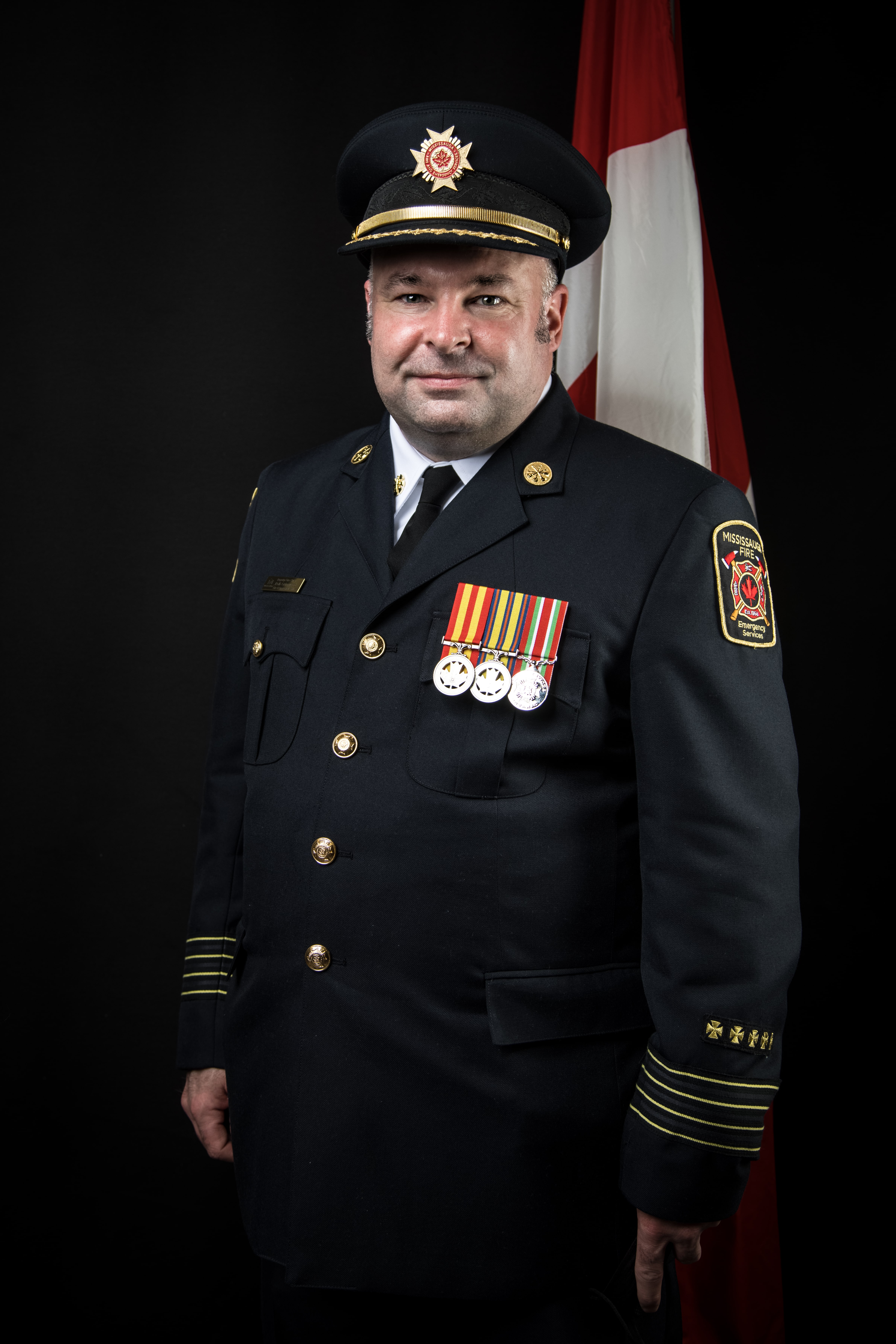 Rob Grimwood has been a member of the fire service for the past 29 years, the past 17 in a leadership capacity and is currently the Fire Chief for the City of Greater Sudbury.
Formerly Rob was a Deputy Chief for the City of Mississauga, a Deputy Chief for the City of Vaughan and the Fire Chief in the City of Dryden, Town of Niagara-on-the-Lake, and Haldimand County. He has also served as a Firefighter with the City of Toronto.
Rob worked as a Paramedic for 20 years and spent nine years as the Paramedic Chief in Haldimand County. He is a past President of the Ontario Association of Fire Chiefs (OAFC), Management Co-chair of the Ontario Fire Services Section 21 Committee and an NFPA Evaluator for the Ontario Fire Marshal's Office.
Rob regularly presents and teaches a variety of topics, but is particularly passionate about reducing firefighter cancer and supporting firefighter mental health.
Understanding FUS Grading: How Fire Underwriters Survey Scores Impact Municipal Risk and Insurance Costs
The Fire Underwriters Survey (FUS) plays a critical role in evaluating a municipality’s fire protection capabilities, influencing both residential and commercial insurance rates. For municipal staff, understanding how FUS grading works—and how municipal decisions affect it is essential for effective planning, budgeting, and risk management. This presentation provides a practical, fire-service–specific overview of FUS, demystifying the process and clarifying municipal responsibilities.
Presenter: Robert Aguiar, Fire Underwriter Survey
Insurance & FUS Panel: How Fire Protection Decisions Influence Municipal Risk and Community Insurance Costs
The relationship between fire protection, Fire Underwriters Survey (FUS) grading, and insurance costs is often misunderstood, yet it has significant implications for municipalities. This panel brings together fire service leaders, insurance industry representatives, and FUS specialists to provide municipal staff with a clear, practical understanding of how fire-service decisions impact community risk, insurability, and long-term financial planning.
Presenters: Robert Aguiar, and more